
Braided Heritage
And a fall so full that it left little room for creative outlets

Dear friends and family,
After several writing prompts and more than a few false starts, I couldn’t gather my thoughts enough to craft my usual bi-weekly newsletter. My writing mind has been pulled in a dozen directions, including responding to the SNAP cuts that have significantly affected our programs at work, hosting friends and family (an excellent and much-needed distraction), squeezing in some work travel, and moving through a fall that was too full for creative outlets.
I know no one is sitting on the edge of their seat waiting for my musings or my attempts at literary practice, but as I’ve said before, I’ve become deeply loyal to this ritual. It feels like a grounding thread I follow back to myself. I never thought I would be a writer, nor did I ever imagine wanting to be one, yet this practice has become a place where I get to learn, experiment with new skills, and make sense of this beautifully chaotic world.
So, although I don’t have a new recipe or a polished piece of writing to offer, I couldn’t let this week pass without at least a small note and the chance to share a recent treasure.
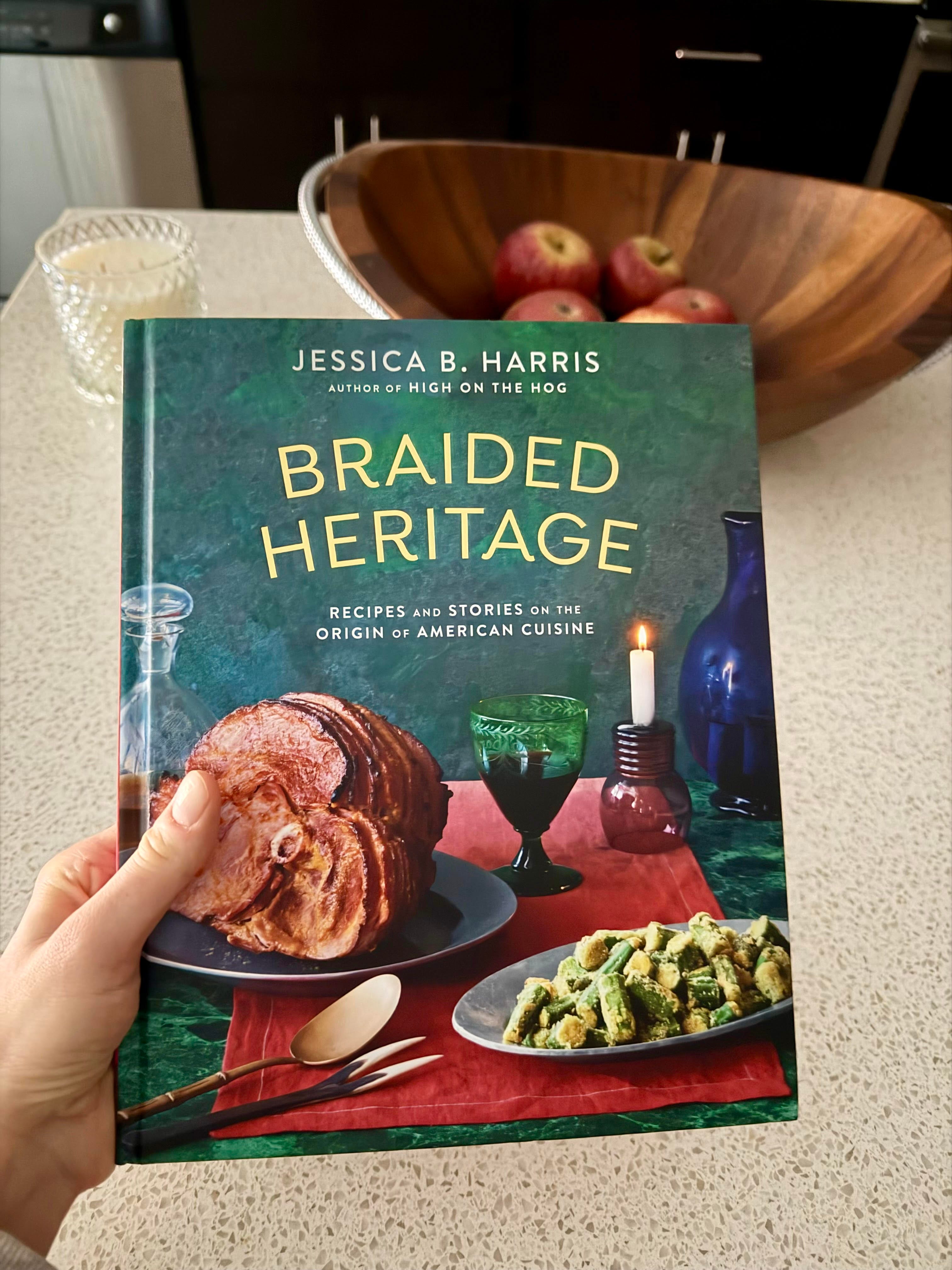
A few weeks ago, I was book-perusing with my dear friend Sarah Flynn (who visited us all the way from London) at the sweetest little bookstore and café in Pittsburgh, White Whale Bookstore. While wandering through the shelves, I came across a cookbook titled Braided Heritage: Recipes and Stories on the Origin of American Cuisine. The book is absolutely gorgeous, gracefully written, and it illuminates the layered, braided story of America itself. It is not a Thanksgiving cookbook by any means, yet it felt like exactly what I needed for this holiday season. A bit of history, a lens into the roots of our nation, and a way to understand a country that I, like many, often feel disconnected from. Below is a little excerpt from the book that describes the concept.
“The early, original foodways of the country are the result of an intricate braiding of three overarching cultures: Native American, European, African. The results, as we all know, is savory and varied indeed. Each brought much to the bubbling cauldron of cultures that would span the nation’s food. Native peoples maintained traditions of innovative agriculture as well as highly developed skills in hunting and foraging. Europeans brought the nascent culinary impulses that would form the national cuisines of the four coloring countries: Spain, Britain, the Netherlands, and France. The Europeans are also the people responsible, in a sense, for the third strand in the braid: They enslaved the Africans, who came with agricultural knowledge and skills in animal husbandry and in the growing key foods, as well as their own culinary technique…
This then is the American braid. Acknowledging the existence of many hands and many cultures and many ways of growing, hunting, fishing, foraging, cooking, serving, and eating, changing the picture of the formation of the American pot.”
Thanksgiving, in so many ways, is the braided table discussed in the cookbook. On this very American holiday, the foods we call “traditional” are really intertwined legacies, each leaving its mark on the dishes we’ll share next week.
The cornbread, squash, beans, cranberries, and wild turkey reflect Indigenous traditions of agriculture and foraging, seed saving, and careful stewardship of the land. The pies, breads, butter, and root vegetables carry the imprint of the Europeans who brought wheat, dairy cows, domesticated animals, and the techniques of oven-roasting and pastry-making. The pumpkin pie we claim as quintessentially American is really a meeting of Native pumpkins and European butter.
And woven through the Thanksgiving table is the profound influence of African knowledge and ingenuity. Sweet potatoes, a cornerstone of so many holiday menus, carry the memory of African traditions rooted in tubers and greens. The slow-simmered gravies, the deep seasoning that gives festive dishes their warmth, and the patient practice of building flavor layer by layer all echo African techniques carried forward by cooks who served families and held tightly to skill and memory even when wrenched from their homelands under unimaginable circumstances.
Together, these strands form the table we gather around today. When we pass the sweet potatoes, the greens, and the pies, we aren’t just sharing a meal. We are sharing centuries of survival, ingenuity, creativity, and cultural roots — simmered, baked, and seasoned into our traditional Thanksgiving meals.
We are, and have always been, a diverse nation. And so this Thanksgiving, and because of this cookbook, I am finding thanks in our braided heritage.
Happy Thanksgiving. I cannot thank you enough for supporting this little hobby of mine, and for the love, care, likes, comments, emails, and text messages you send. I feel close to each of you, and you help me make sense of the world and my place within it.
With love,
Olivia
Very well written! Thanks for sharing your insights and feels for our country and the upcoming holiday! Send holiday wishes to you and your family.
I look forward to your Saturday musings! Thanks for the share!