
Vagabonds
Living Without a Home and the Existential Crisis of Leftover Harissa

I’m moving to Pittsburgh in under six weeks, so I’ve been playing my version of Chopped with whatever’s left in the fridge. Last week, I set out to use the last of the harissa I bought for the Red Pepper Sauce recipe. Finishing an entire jar—especially with a move on the horizon—feels like a rare and satisfying achievement (for reasons I unpack in this week’s Food for Thought).
So, if you’re one of the friends who texted me that you made the sauce, here are a few more recipes to help you use the rest of the jar in your fridge. And if you’re not one of those friends, consider this your reminder to try it :)

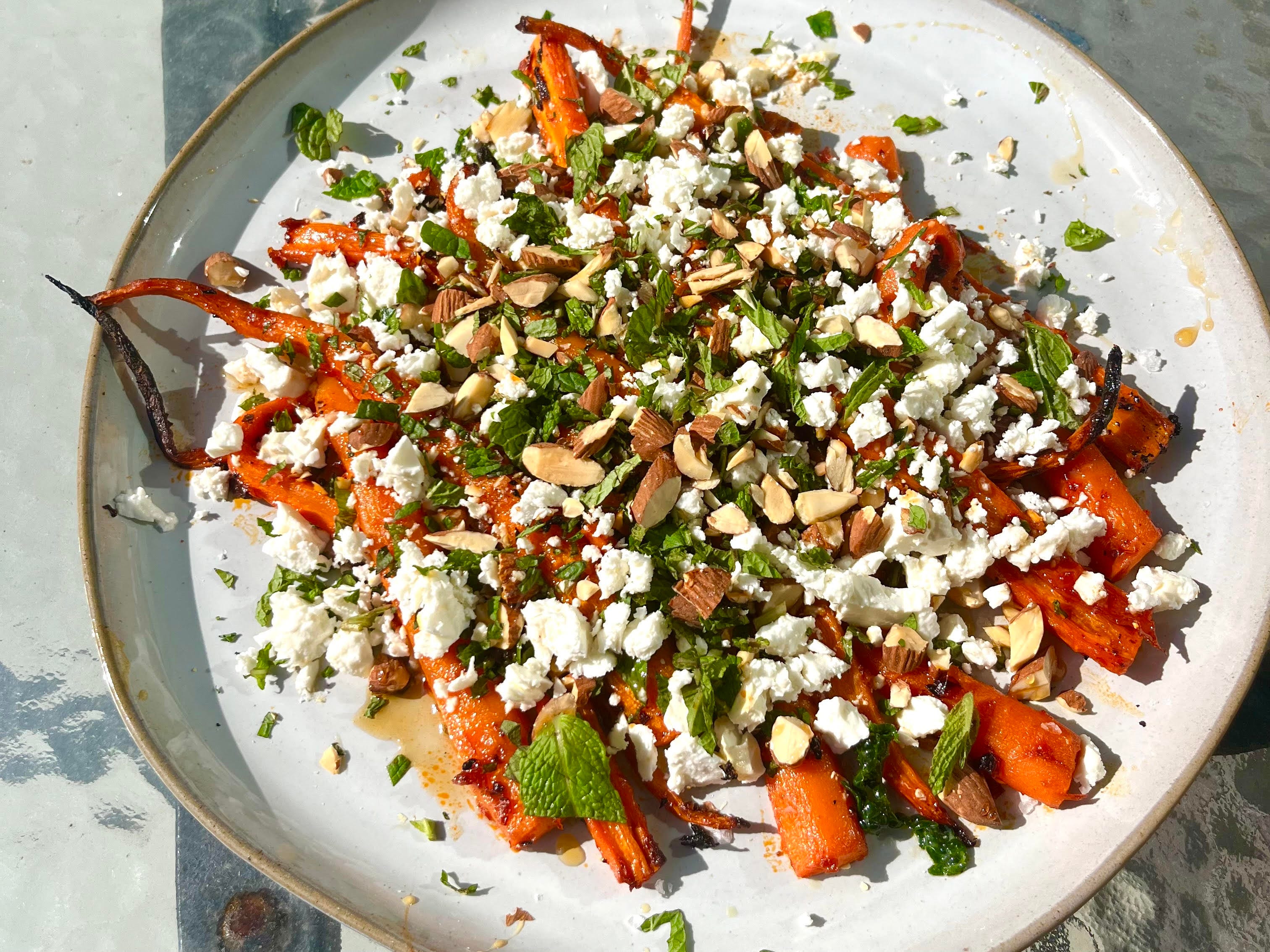
Roasted Carrots with Honey Harissa Dressing
Ingredients
For the Roasted Carrots:
2 pounds medium carrots
2 tablespoons oil (I used extra-virgin olive oil)
½ teaspoon salt
½ cup chopped roasted almonds
½ cup crumbled feta cheese (optional)
⅓ bunch fresh herbs (mint, basil, or parsley) *
For the Harissa Dressing:
2-3 tablespoons harissa paste (depending on your spiciness preference)
2 tablespoons honey or maple syrup
2 tablespoons oil (I used extra-virgin olive oil)
1 small lime (or 4 tablespoons lime juice or vinegar)
*If you don’t have fresh herbs, use about 2 teaspoons of dried herbs or seasoning blends like za’atar, Italian seasoning, or whatever you have on hand.
Equipment: Cutting board, chef’s knife, measuring spoons, tongs, 18x13 half-sheet pan, small bowl, fork, serving dish, optional vegetable peeler, Silpat or parchment paper, zester (to zest the lime)
Prep your oven for roasting
Preheat the oven to 425°F. Make sure the rack is in the middle of the oven. Line a sheet pan with parchment paper or a Silpat.
Wash and chop the carrots and herbs
If the carrots are large, cut them in half crosswise first to create more manageable lengths. Trim the root ends, then slice each piece in half lengthwise to form long, even spears. If the spears are still thick, cut them lengthwise again into quarters. Arrange the carrot spears on the lined sheet pan. If using fresh herbs, wash and roughly chop them, then set aside on the cutting board for later.Roast the carrots
Add 2 tablespoons of oil and salt to the sheet pan and toss the carrots with your hands or tongs until evenly coated. Spread them in a single layer on a baking sheet. Roast for 25–30 minutes, or until the carrots are tender and starting to caramelize around the edges.Make the dressing:
In a small bowl, zest the lime (optional), then juice the lime using a fork, removing any seeds. Add the harissa paste, honey, and oil. Whisk with the fork until the dressing is smooth and glossy. Taste and adjust the sweetness or spice as needed.Assemble the dish
Transfer the roasted carrots to a serving dish. Drizzle with the dressing and gently toss to coat with the tongs. Top with chopped almonds, crumbled feta (if using), and a handful of fresh (or dried) herbs for color.Serve and Enjoy
Serve with roasted salmon, grilled chicken, or with your favorite veggie-burger!
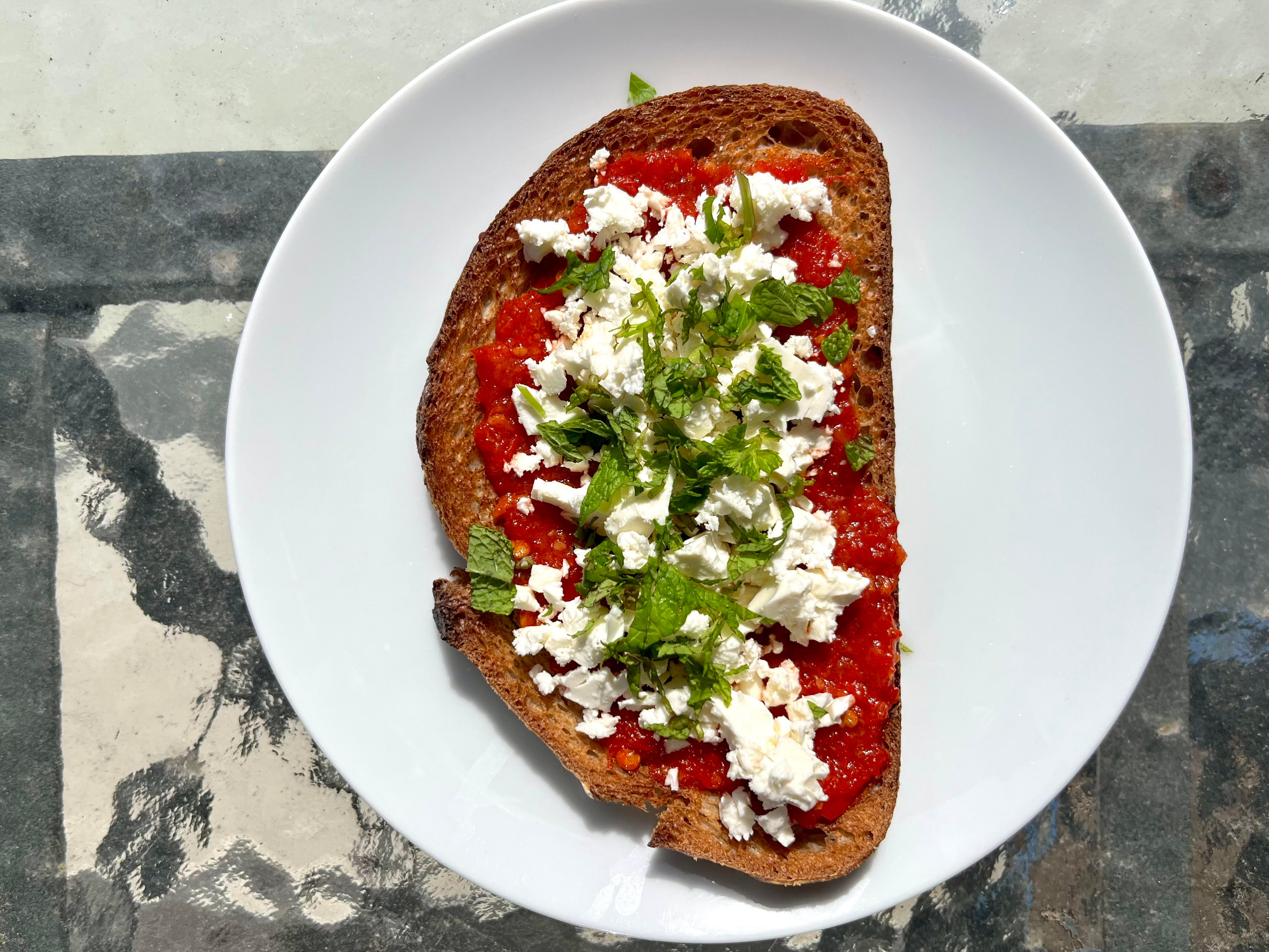
If you still have harissa, consider making the dressing again—or try it spread on toast with the remaining feta, some chopped herbs, and a drizzle of honey.

For ten years, my family lived like vagabonds. During the 2000s housing crash, our oversized childhood home sat on the market far too long, costing more than my mom could afford. Then, one day, a foreclosure letter arrived in the mail. We had 30 days to leave our safe place with no money and nowhere to go.
At first, we carefully packed our treasures in a rented storage unit. Once it was filled, we invited friends and family to come and adopt our belongings: bed frames, couches, board games, and kitchen appliances. By week four, after the electricity was shut off, my mom, aunt Odille, and I packed by candlelight. We played show tunes from a small battery-powered boombox, ordered pizza, and packed what we could to store in local family basements. By the end, we were distilled down to a few suitcases. We left behind a grand piano, a handful of unread books from my dad’s library, and the fundamental feeling of security in a house no longer ours.
My mom once saw a coastal town called Rockport in a TV commercial and thought it seemed safe and quiet. So, with nowhere to live and no reason to stay, we left the Berkshire Mountains, heading east toward that ocean, hoping to find a new beginning. By Monday, I was starting my sophomore year of high school, mid-semester, in a town we had only seen on television.
A realtor gave us a good deal on a furnished seasonal rental, which we accepted immediately. Anyone in an oceanic vacation town knows that off-season housing can be affordable, but when summer hits, summer residents return and the prices triple. By June, we were again without a home.
This housing cycle became our version of normal. From September to May, we played pretend in a borrowed home, enjoying dinner around the kitchen table, hosting sleepovers, and doing our best to build something that felt like stability. It was a fairytale, staged with someone else’s furniture, seashell picture frames hosting the photos of strangers, and vases filled with sea glass we hadn’t found. But every summer, from June to August, the illusion dissolved, and we were left homeless.
Our family of four rotated through local friends’ finished basements, in-law suites, and budget motels, stitching together a patchwork of summer living. We stayed a few days here, a couple of weeks there, moving like drifters on a restless trail. We learned to live lightly and cling to routine wherever we could find it. Over time, we became experts at packing, unpacking, and making any space feel like home.
In cramped motel rooms, my brother often opted to sleep on the floor. My sister and I shared a bed but insisted on separate fleece blankets to give the illusion of privacy. We'd order sandwiches from down the street, and my mom would make salad from pre-chopped veggies stored in a mini fridge. Our room became a makeshift kitchen, then a movie theater—microwave popcorn in bed and Hallmark movies lighting up the screen as we escaped into someone else’s happy ending.
Somehow, we maintained a sense of normalcy over those summer months. I showed up at the local café by 6:00 a.m. to sling lattes and cappuccinos while my siblings made it to soccer practice or shifts in restaurant dish rooms that would hire teens. We shared one car, one bicycle, one room, and one unspoken sense of survival that oddly brought us closer.
With each move, we picked up small tricks. One of them was the art of discreetly throwing shit away. We would quietly toss food, discolored Tupperware, and anything else that felt like dead weight while my mom was at work. She had grown up in the back of her family’s restaurant, which trained her instinct never to waste (a telltale sign of restaurant life). To this day, she saves marinara sauce jars, scraps of wrapping paper, and old T-shirts destined to become rags. So, we had to be sneaky, carefully disposing of anything unnecessary without her noticing. We weren’t trying to be wasteful, and we knew money was tight, but we just wanted the next move to feel lighter than the last. And sometimes, it was simply easier to let something go than figure out how to bring it with us.
Now, at 34 and preparing for yet another move, I catch myself fighting the familiar urge to toss the half-used jar of harissa. This time, though, I’m determined to savor every last spoonful of that spicy red paste. As for the crusty bottle of BBQ sauce lurking on the fridge door? I might cave and toss it. Just don’t tell my husband.
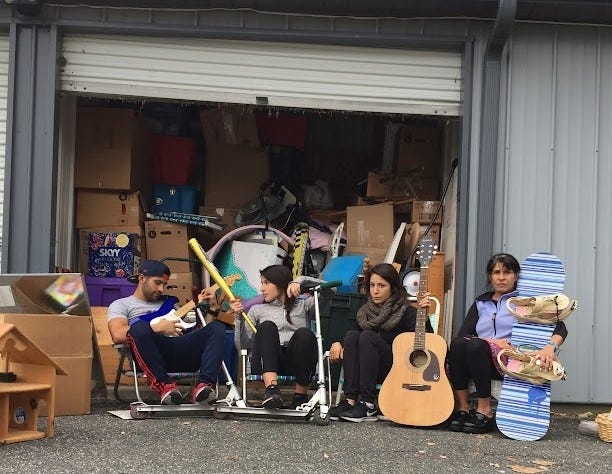
Afterword: Our storage unit still sits untouched and unkempt—a time capsule of the life we once lived. We’ve only returned once, intending to unpack, but ended up sifting through old games, instruments, and shared memories, laughing until we closed the door with no real plan to return. But this August, we’ve booked a hotel for a weekend in the Berkshires. We are finally ready to face the past and clean it out for good.
Some details in this story have been fast-tracked to keep things short and sweet. I promise it wasn’t for dramatic effect; if anything, the full version is even more dramatic.
What a story! I feel your pain with the half-used condiments...
I had no idea that this was your life in Rockport. What an amazing family. A+ on the writing 🤣